Nana Patekar: A Human Beyond Fame…
On Thursday, October 8, when news began circulating on social media that “Nana is no more,” a sudden, stunned silence seemed to grip digital platforms. In this era of fake news, everyone scrambled to verify the report. However, when the confirmation of Nana Patekar's passing finally emerged, the news turned into a profound shock for his admirers.
Updated: 10/10/2026, 1:37:53 pm IST
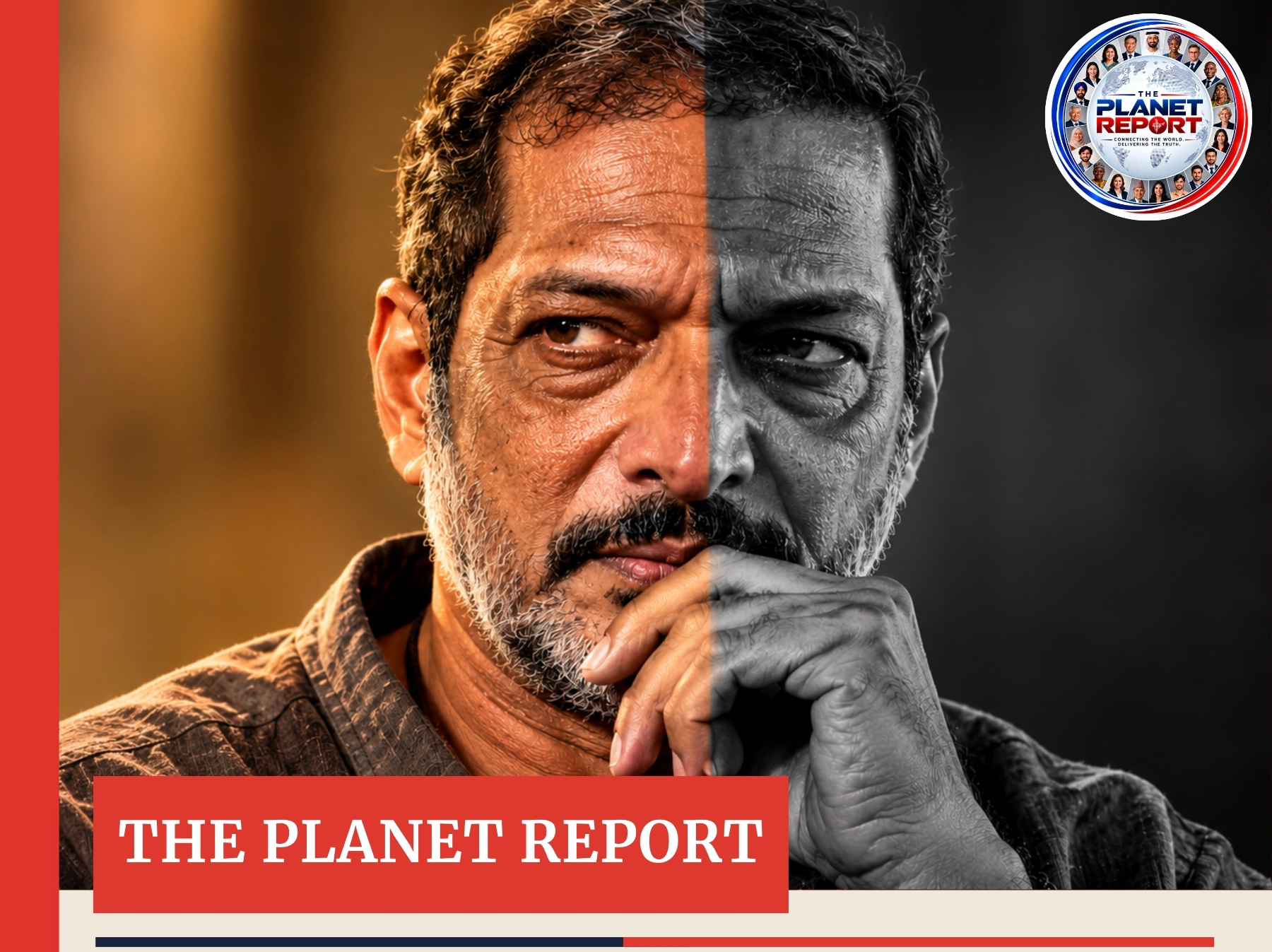
THE PLANET REPORT
The 60-second brief
- Nana Patekar (1951–2026): Key Facts
- Cinema: Rose from poverty to multiple National Awards and the Padma Shri.
- Activism: Donated ₹1.5 crore and co-founded Naam Foundation for distressed farmers.
- Simplicity: Kept away from stardom's glitz, calling 12 maunds of firewood his only real wealth.
According to reports, Nana was found unconscious early Thursday morning at his residence in Goa. He was administered CPR for approximately 45 minutes and subsequently rushed to a hospital, where doctors declared him dead due to cardiac arrest.
Born in 1951 in Murud-Janjira, Maharashtra, Vishwanath Patekar, popularly known as Nana Patekar, was a veteran actor of Hindi and Marathi cinema. Yet his identity was never confined merely to acting. He was equally recognized as the voice of millions, an ally to the needy, and a steadfast pillar of support for impoverished farmers.
Just days prior to his passing, a video from an event in Goa gained widespread attention in which he was heard stating, "Everyone has to leave this world one day; who knows if one will be here the next day." Today, amid news of his demise, recalling these words has left admirers tearful. Truly, the words spoken by a person sometimes acquire an entirely new meaning after they are gone.
• From Struggle to Success:
Departing the world at the age of 75, Nana’s early life was marked by immense struggle. He began working at the tender age of 13. After school hours, he would head to Mumbai’s Chunabhatti area to paint movie posters. According to an archival interview, he earned merely 35 rupees a month for this work and walked several kilometers on foot to get there. These grueling childhood experiences granted him a close understanding of life and human suffering.
He marked his debut on the silver screen with Muzaffar Ali's film Gaman. Films like Tirangaa and Krantiveer elevated his popularity to soaring heights. Following this, he proved his acting prowess across a series of stellar performances. For his acting in Parinda, Krantiveer, and Agni Sakshi, he was honored with National Film Awards. Furthermore, in 2013, he was conferred the Padma Shri for his distinguished contributions to the field of arts.
Yet, there was an aspect to Nana’s life that stretched far beyond his cinematic achievements—his profound ability to feel the pain of others as his own.
• Treating Farmers’ Suffering as His Own:
In 2015, Maharashtra was reeling under a devastating drought. Crops were ruined, and reports of farmer suicides were surfacing continuously. In such grim circumstances, Nana resolved to step forward and assist the farmers. It is reported that he decided to redirect around 1.5 crore rupees—which he had saved up to purchase a personal car—toward providing relief to farmers instead.
The realization that farmers lacked even basic access to water while he himself would travel by car weighed heavily on his conscience. He reached out to his close friend and filmmaker Makarand Anaspure, charting out a plan to deliver aid directly to distressed farmers.
Soon, however, he realized that financial assistance of a few thousand rupees would not resolve the fundamental crises in farmers' lives. The core issue was rooted in severe water shortages and recurrent drought. Consequently, in September 2015, alongside Makarand Anaspure, he established the 'Naam Foundation.' Through this foundation, large-scale relief operations, water conservation initiatives, and direct support in drought-hit regions were undertaken.
This initiative illustrates that true human greatness does not rest solely on fame or fortune, but on how deeply one empathizes with the suffering of others and the actions one takes to alleviate it.
• Fearless of Death, Grounded in Life’s Reality: A True Krantiveer
Nana Patekar was a spirited, compassionate individual. Despite living in the glamorous world of showbiz, he remained far removed from ostentation and was widely admired for his candid, forthright manner. His simplicity was never confined to the roles he portrayed onscreen; it was vividly evident in his everyday personal life as well.
In 2023, during an interview around the release of the film The Vaccine War, he articulated his thoughts on life and mortality in these words:
"Death is an inevitable reality, and where can we run to escape it? I know that one day I have to leave; hence, amassing endlessly in life, earning piles of money, or collecting possessions makes no sense to me. I have even determined my final asset. I know that in the end, all I will need is 12 maunds of wood—that is my ultimate wealth. I have already gathered and kept firewood for myself. It is dry. I have instructed that when my last rites take place, only that wood must be used. Do not use damp wood, or it will produce smoke. The friends gathered there will get smoke in their eyes, causing tears to flow. Looking down from above, I might get the misconception that these people are genuinely weeping for me. At the very least, while dying, one shouldn't carry such a misconception......
According to sources, Nana was also scheduled to participate in the show Kaun Banega Crorepati on October 8, intending to channel the prize money toward farmer relief work through his 'Naam Foundation.' But perhaps destiny had other plans, and he departed before that could happen.
Today, Nana is no longer among us, but his memorable roles, his resounding voice, his fearless candor, and his dedicated humanitarian work for the marginalized will keep his memory alive. Ultimately, an individual carries neither wealth nor fame into the hereafter. What endures behind are their deeds, their memories, and the lasting impact left upon the lives of others. And perhaps, that remains the greatest legacy anyone can leave behind.
Sources & reading notes