From Kapil Mishra to Anurag Thakur, Dr. Sandeep Names Several Leaders and Asks: Who Does the Hate Speech Law Really Apply To?
Dr. Sandeep has raised serious questions over hate speech and the application of law in India, naming several senior BJP leaders in the process. Referring to controversies involving Kapil Mishra, Ramesh Bidhuri, Anurag Thakur, Parvesh Verma and several chief ministers, he questioned what standard of accountability applies when political leaders are accused of making religious or communal remarks. He also linked the Akriti Chaudhary NSA case to the broader debate over equal application of law.
Updated: 28/9/2026, 5:36:14 pm IST
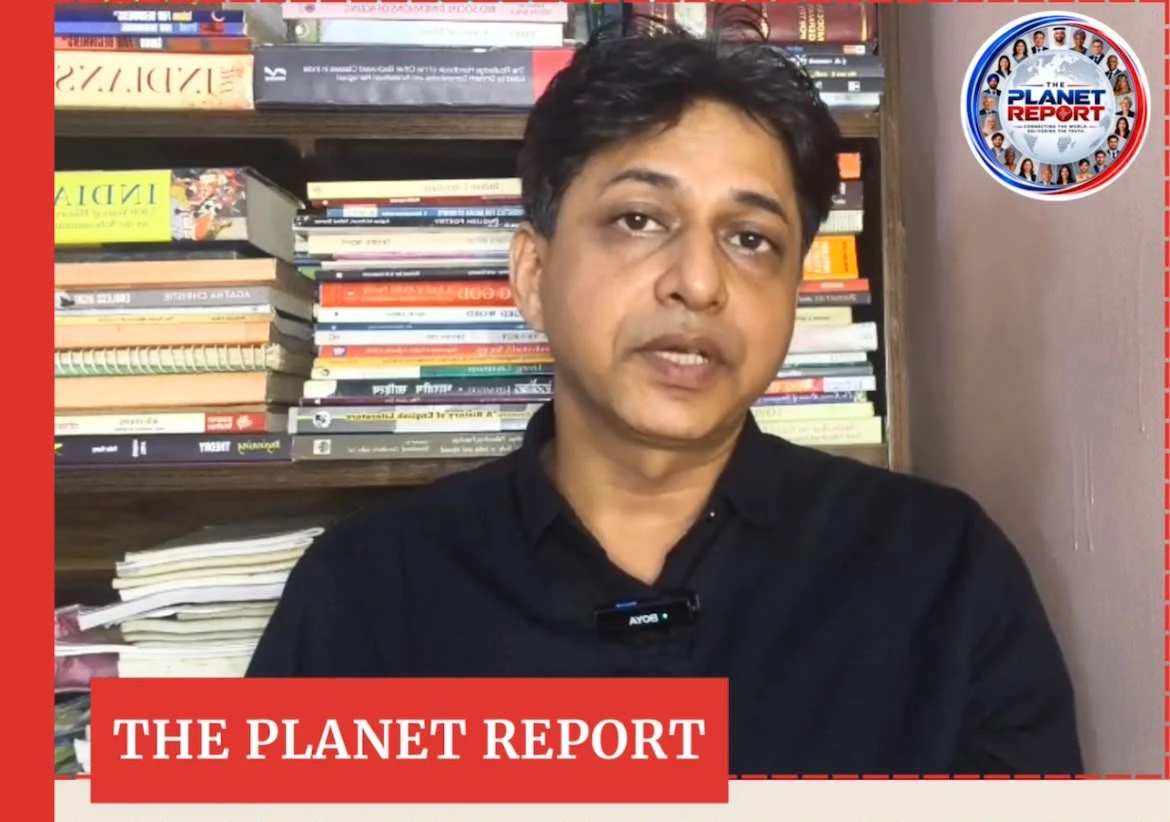
THE PLANET REPORT
The 60-second brief
- Dr. Sandeep has raised questions over hate speech and law enforcement in India while referring to several prominent political leaders.
- He claimed that 1,165 hate speech incidents were reported across India and that a large number of them were linked to BJP leaders.
New Delhi: “If there is a law against hate speech, then who is it actually applied to, and by what standard?”
Dr. Sandeep raised this question while referring to several political leaders and past controversies linked to hate speech, political rhetoric and the use of law in India.
In his statement, he claimed that 1,165 hate speech incidents had been reported across the country and that a large number of them were linked to BJP leaders. He also said that hundreds of these cases fell into a serious category.
But Dr. Sandeep’s argument did not stop at numbers. He referred to a series of high-profile political controversies and questioned how accountability is determined in such cases.
Kapil Mishra and the 2020 Delhi Riots
One of the first names he mentioned was BJP leader Kapil Mishra.
Dr. Sandeep referred to the controversy over Mishra’s speech ahead of the 2020 North-East Delhi riots and the allegations of hate speech made against him.
He questioned why, when a statement by a major political leader leads to such serious controversy, the impact of subsequent legal action is often not clearly visible to the public.
Ramesh Bidhuri’s Remarks Inside Parliament
Dr. Sandeep then referred to former BJP MP Ramesh Bidhuri.
In 2023, a major controversy erupted after Bidhuri used objectionable language linked to the religious identity of then BSP MP Danish Ali during proceedings in the Lok Sabha.
Dr. Sandeep cited the incident to argue that when such language is used even inside Parliament, questions over political and legal accountability become more serious.
Questions Over Terms Like ‘Infiltrators’, ‘Love Jihad’ and Other Political Rhetoric
Dr. Sandeep also referred to statements made by senior BJP leaders at different times.
He mentioned terms and political expressions such as “infiltrators”, “love jihad”, “land jihad” and “shamshan-kabristan”, arguing that such language can deepen divisions and tension between communities.
He named Uttar Pradesh Chief Minister Yogi Adityanath, Assam Chief Minister Himanta Biswa Sarma and Uttarakhand Chief Minister Pushkar Singh Dhami among several political leaders he referred to in his statement.
Dr. Sandeep alleged that religiously charged remarks have surfaced on multiple occasions, while serious legal action is not always equally visible.
Anurag Thakur and Parvesh Verma Also Mentioned
Dr. Sandeep also referred to controversies involving Anurag Thakur and Parvesh Verma during the 2020 Delhi Assembly election period.
Certain slogans and speeches from that time triggered political controversy and later became the subject of legal proceedings.
Dr. Sandeep used these cases to question how the legal threshold for hate speech is determined when controversial political speeches reach the courts but do not ultimately result in criminal action.
Several Other Political Names Raised
In his statement, Dr. Sandeep also mentioned T. Raja Singh, Nitesh Rane, Ashwini Upadhyay and other political figures.
He said that these leaders too have, at different points, faced allegations over remarks targeting religious communities or making communal statements.
His question was whether repeated controversies should remain only political disputes, or whether the law should respond in a clear and consistent manner.
“What Happens When the Fear of Law Disappears?”
In another part of his statement, Dr. Sandeep referred to an accused person who allegedly appeared before cameras after an incident and openly spoke about his role.
He questioned how an individual could feel so little fear of the police and the law that he could publicly discuss an alleged offence.
According to Dr. Sandeep, this raises a broader question not only about one accused person, but also about the deterrent effect of law enforcement.
Akriti Chaudhary NSA Case Also Raised
Dr. Sandeep then referred to the Akriti Chaudhary NSA case from Gautam Buddha Nagar.
The case involved judicial scrutiny of the use of the National Security Act and administrative action.
Dr. Sandeep referred to the matter while questioning the use of administrative powers.
His argument was that while legal proceedings in cases involving controversial political speeches can continue for long periods, stringent laws can sometimes be used more quickly against ordinary citizens.
What Is the Central Question?
The main point raised by Dr. Sandeep goes beyond any one leader or one political party.
His central question is:
Does the law in India apply to every person with the same speed, seriousness and standard?
Across debates involving hate speech, political rhetoric, police action and administrative powers, this question remains central to the wider public discussion.
It is important to distinguish between political allegations, legal findings and judicial decisions. But in a constitutional democracy, one question remains fundamental: Is equality before the law only a principle written in the Constitution, or is it equally visible in practice?
Sources & reading notes
This is an original general reader guide, not a report of a current event or a verified fact-check.